Beyond the Textbook: What Education Must Become ?

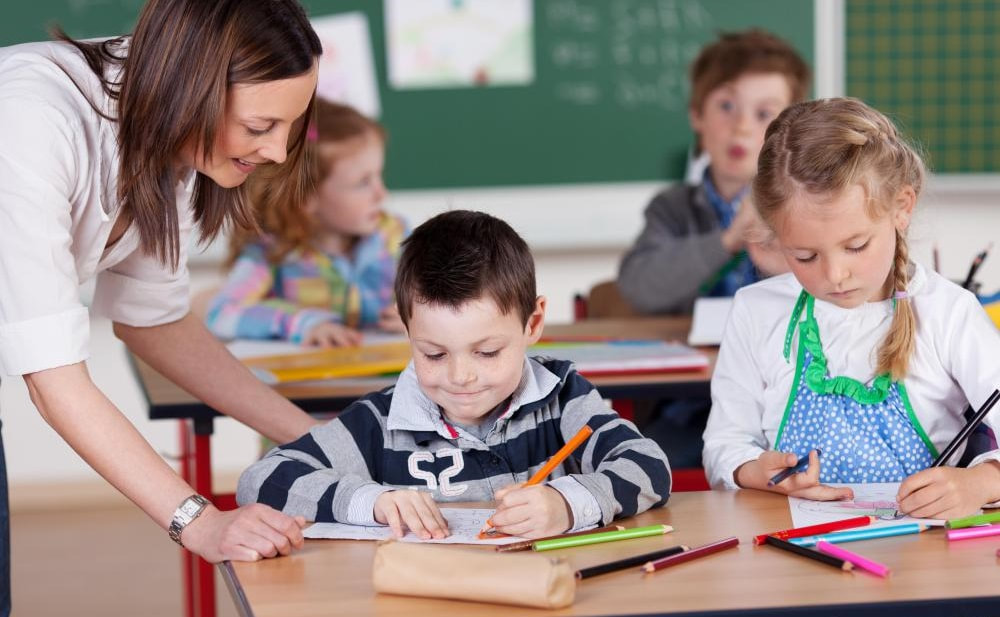
For centuries, the image of education has remained stubbornly static: neat rows of desks, a teacher at the front, a textbook opened to a highlighted page. We have built temples of learning—universities, libraries, labs—yet a quiet crisis is unfolding. While the world has been digitized, disrupted, and democratized, our core model of schooling still carries the fingerprints of the Industrial Revolution: efficiency, conformity, and the mass production of workers.
The question is no longer “How do we teach?” but rather, “What is education for?”
The Knowledge Paradox
We live in an age of radical abundance. Any student with a smartphone has access to more information than a scholar did a generation ago. Facts, once the currency of the educated elite, are now a commodity. If a student can ask a chatbot to write an essay, solve a calculus problem, or summarize War and Peace in three bullet points, then the traditional lecture-and-exam model has become obsolete.
This is not a crisis; it is an opportunity. When access to information is no longer the bottleneck, the purpose of education shifts dramatically. It stops being about transferring data and starts being about transforming the learner.
The Four Pillars of Modern Learning
To remain relevant, education must rebuild itself on four new pillars.
1. Critical Ignorance
We are drowning in noise. The most valuable skill of the 21st century is not speed-reading, but discernment. Students need to learn how to identify bias, spot logical fallacies, and distinguish between evidence and assertion. We must teach the art of skepticism—not cynicism, but the disciplined ability to withhold judgment until the evidence is clear.
2. Adaptability over Specialization
The half-life of a technical skill is shrinking. The coder of today may be obsolete tomorrow. Therefore, education must prioritize “learning how to learn.” Instead of memorizing the periodic table, students should learn how to structure a complex problem. Instead of mastering a single software, they should learn the logic of systems. A resilient mind is not a full hard drive; it is a flexible operating system.
3. Analog Socialization in a Digital World
The pandemic revealed what we lost when screens replaced faces. Emotional intelligence, conflict resolution, and the ability to read a room cannot be taught via Zoom. The physical classroom remains vital—not for lectures, but for collaboration, debate, and the messy, unpredictable work of human connection. Schools must become anchor points for empathy.
4. Purpose as a Curriculum
We have inadvertently raised a generation of high-achieving automatons who can ace a test but cannot answer the question: Why does this matter? The most profound shift in education is moving from extrinsic rewards (grades, degrees, gold stars) to intrinsic motivation. Project-based learning, real-world internships, and self-directed study are not luxuries; they are necessary to prevent the quiet despair of doing work without meaning.
The Teacher’s New Role
If students are no longer empty vessels to be filled, the teacher cannot remain the “sage on the stage.” Instead, the teacher becomes the “guide on the side.” This is a more difficult job, not an easier one. It requires the educator to be a coach, a mentor, and a designer of experiences.
The best teachers in the coming era will not be the ones who know the most facts. They will be the ones who ask the best questions.
The Risk of Inaction
The alternative to reforming education is stark. If schools refuse to adapt, they will be bypassed. Micro-credentials, boot camps, and AI tutors will replace the diploma. While this sounds disruptive, it carries a danger: without the holistic environment of a school, we risk losing the very things that make us human—ethics, debate, and the slow cultivation of wisdom.
We do not need faster learners. We need deeper thinkers. We do not need perfect test scores. We need resilient citizens who can navigate ambiguity, hold contradictory ideas in their heads, and still act with compassion.
A New Report Card
So, let us imagine a different report card. Alongside “Mathematics” and “Literature,” we assess “Collaborative Grit,” “Digital Hygiene,” and “Curiosity Quotient.”
Let us measure schools not by their college acceptance rates, but by the mental health of their students and the civic engagement of their alumni.
Education is the most powerful weapon we have to change the world—but only if we are brave enough to change education itself. The classroom of the future is not a place where you go to get answers. It is a place where you go to discover questions that have no easy answers. And in that discovery, we finally prepare our children not just for a job, but for a life worth living.
